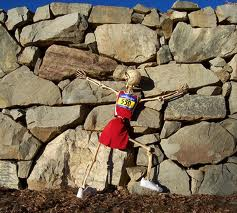
Today is officially the start of my taper for the Milton Keynes Marathon (on 6th May).
Having run 23.5 miles yesterday, all of my longs runs are now done and I will be gradually reducing my training volume as I approach race day. Albeit, I am going to include a few more faster sessions this year, with a view to keeping some sharpness and tuning my legs into race pace (target 8:00 m/m).
The trouble with this stage of your training is that you know there is nothing you can do to improve your chances of achieving your marathon goal and that any attempts to squeeze in 'one last long run', will probably do more harm than good.
It is also inevitable that you will look back on the runs or sessions that you might have missed. For me, I missed out on a 20 miler due to getting the date for the MK Half wrong and I also miscalculated my total weeks when devising my training plan, so I won't be doing the 24 miler I had scheduled for next Sunday. Now, they are two fairly key sessions right there and I am currently in panic mode, thinking, have I done enough? So much so, I have been comparing my training with the latter stages of my Brighton Marathon training in 2011!
The fact is, marathon training very rarely goes 100% to plan. Home life, work, social occasions, injuries and in my case, the inability to use a calender(!) can all cause us to deviate from our marathon training plans. In looking back at my Brighton Marathon training from last year, I noticed that I had to skip a couple of key sessions/long runs late on, due to shin splints. I had completely forgotten about this injury and the minor lay off it caused. Clearly, it didn't affect my preparation too much because I PB'd at Brighton by over 15 mins (3:44:49).
So, I am writhing this post just to remind me to look at the key sessions I DID complete and not to panic during the 'Taper Madness', which will no doubt increase as I edge closer to race day. Instead, I should enjoy the fact that my Sunday runs are not going to consume the whole day and that I am giving my body a chance to recover before race day!
How are you/have you coped with 'Taper Madness'?
I created this blog to chart my progress as a recreational runner who began eating paleo / low carb-high fat in April 2014. I comment on trends in running, racing, books and nutrition/fitness. As well as running gear and tech. I am a 'middle of the pack runner' who started running in 2007. I live in Nottingham, UK with my wife and 3 cats. You can follow me on Twitter: @runrforlife
Monday, 15 April 2013
Monday, 18 March 2013
10 things I wish I knew prior to running the Virgin London Marathon
I ran the Virgin London Marathon in 2011 (4hrs 16mins and 57secs, if you are interested). It was my first marathon and like a lot of people running their first marathon, I learnt a lot during training but also during the race itself.
Here are 10 pieces of information I would have found useful prior to running this iconic race:
1. It may be significantly hotter on race day than during your training runs. If you live in the UK, you will have done the majority of your training during the winter months. When I ran the VLM in 2011 it was quite a hot day (in the early 20's). I had adjusted my clothing according to the forecast but I hadn't accounted for the difference it would make to my hydration strategy (which consisted of water and gels during training and on race day). Cue: calf cramps at 19 miles due to a lack of electrolytes.
2. If you are staying in London for the race, pick a hotel closer to the finish (on the Mall), rather than the start. Trust me, you will be more willing to travel in the morning than after the race has finished! Public transport is free for runners on the day, so travel to Greenwich Park in the morning is easy.
3. The start of the race (for about the first 4 miles) can be a bit slow, due to the sheer volume of runners. You should be aware of your pacing strategy anyway but you should also be prepared to adjust this to account for any slow miles (or loo breaks!). This adjustment should be carried over the remainder of the race rather than made up in the next few miles.
4. Anyone who has raced before knows that it is easy to get swept up in the excitement early into a race and end up going off too quickly. Well, at VLM, this can happen at almost any part of the race because of the volume of runners and the fantastic levels of support. So, keep an eye on your pacing. Use a Garmin (or similar) and/or a pacing band (available at the expo).
5. The VLM is sponsored by Lucozade, so you will find their gels and drinks at the drinks stations on the course. If you are planning to use these products during the race (as opposed to your own drinks, gels etc), then it is a good idea to use them on your longer training runs. Otherwise, you run the risk of an upset stomach. Not something you want as part of your VLM experience!
6. If you are bringing a support crew with you on the day, it is a good idea to pick out a landmark for them to support from. The crowds are huge and whilst they might see you, it will be difficult for you to pick them out of the crowds. If you are running for a charity (and assuming they have a stand on the course) then this is a good place for them to stand. Seeing my wife at about 22 miles was very emotional and gave me a huge lift!
7. You should also pick a landmark close to the finish to meet friends/family. Mobile networks may well be down.
8. In addition to the photographers on the course, there are also race photographers in the finish area. I neglected to have my photo taken but looking back would have liked an official photo in front of the sponsors hording, sporting my medal. So, be prepared to wipe the sweat from your face and give your hair a quick comb through! There is no obligation to buy the photo's but it might be nice to have the option.
You might opt for an official finish photo!
9. You may well have a long wait at the start at Greenwich Park, so make sure you have adequate clothing to keep out the elements. You may also have to wait for a while before you are reunited with your friends/family at the end of the race. I would recommend including a fresh top to change into and any recovery drinks/food within your kit bag (rather than leaving it with friends/family). Note: you have to use the plastic kit bags provided. You can't just stick your number on your own rucksack, for example.
10. Finally, VLM is a unique racing experience that will live with you forever. Enjoy the day and remember to smile, cheer the marshalls and support and take it all in.
Good luck!
Here are 10 pieces of information I would have found useful prior to running this iconic race:
1. It may be significantly hotter on race day than during your training runs. If you live in the UK, you will have done the majority of your training during the winter months. When I ran the VLM in 2011 it was quite a hot day (in the early 20's). I had adjusted my clothing according to the forecast but I hadn't accounted for the difference it would make to my hydration strategy (which consisted of water and gels during training and on race day). Cue: calf cramps at 19 miles due to a lack of electrolytes.
![]() |
| Smile! You might be on TV! |
2. If you are staying in London for the race, pick a hotel closer to the finish (on the Mall), rather than the start. Trust me, you will be more willing to travel in the morning than after the race has finished! Public transport is free for runners on the day, so travel to Greenwich Park in the morning is easy.
3. The start of the race (for about the first 4 miles) can be a bit slow, due to the sheer volume of runners. You should be aware of your pacing strategy anyway but you should also be prepared to adjust this to account for any slow miles (or loo breaks!). This adjustment should be carried over the remainder of the race rather than made up in the next few miles.
4. Anyone who has raced before knows that it is easy to get swept up in the excitement early into a race and end up going off too quickly. Well, at VLM, this can happen at almost any part of the race because of the volume of runners and the fantastic levels of support. So, keep an eye on your pacing. Use a Garmin (or similar) and/or a pacing band (available at the expo).
![]() |
| At the VLM Expo |
6. If you are bringing a support crew with you on the day, it is a good idea to pick out a landmark for them to support from. The crowds are huge and whilst they might see you, it will be difficult for you to pick them out of the crowds. If you are running for a charity (and assuming they have a stand on the course) then this is a good place for them to stand. Seeing my wife at about 22 miles was very emotional and gave me a huge lift!
7. You should also pick a landmark close to the finish to meet friends/family. Mobile networks may well be down.
8. In addition to the photographers on the course, there are also race photographers in the finish area. I neglected to have my photo taken but looking back would have liked an official photo in front of the sponsors hording, sporting my medal. So, be prepared to wipe the sweat from your face and give your hair a quick comb through! There is no obligation to buy the photo's but it might be nice to have the option.
You might opt for an official finish photo!
9. You may well have a long wait at the start at Greenwich Park, so make sure you have adequate clothing to keep out the elements. You may also have to wait for a while before you are reunited with your friends/family at the end of the race. I would recommend including a fresh top to change into and any recovery drinks/food within your kit bag (rather than leaving it with friends/family). Note: you have to use the plastic kit bags provided. You can't just stick your number on your own rucksack, for example.
10. Finally, VLM is a unique racing experience that will live with you forever. Enjoy the day and remember to smile, cheer the marshalls and support and take it all in.
Good luck!
Monday, 11 March 2013
Race Review - Milton Keynes Half Marathon 2013
Pros: Relatively quick course, good organisation, plenty of toilets at start/finish, plenty of parking, the ability to shelter in the Xscape centre.
Cons: Not particularly scenic, some traffic on course, killer hill in the last mile, no goody-bag.
This was my first time running the Milton Half Marathon. It is part of the Milton Keynes Festival of running, which also includes a 5k and 10k race (which started slightly earlier).
We were able to get parked very close to the start/finish area at the Xscape centre and lucked upon a multi-storey which happened to be free. It was absolutely freezing when we arrived at 9:30am. The car was showing 1c but I reckon it was about -7c with the wind chill! We were able to shelter in the Xscape centre and even managed to get a seat in the Costa Coffee there. With about 20 mins to go, we headed out to use the loos and head to the start line. I think this was the first race I have attended, where there were no queues for the toilets (perhaps everyone was just sheltering inside and using the facilities inside!) The start was well signposted and we got away on time.
I read that they had introduced a wave start (splitting sub 2 hours and over 2 hours, I believe) and this seemed to work well. In fact the first 2 miles were very quick. This is where I need to apologise to #TeamColwick. I had planned to run this race as a pacing exercise for the Milton Keynes Marathon (on 6th May). I had put down 1:44:45 for my #Marchvellous prediction and was planning to tap out metronomic 8 minute miles throughout. A combination of those first couple of miles being downhill and the fact I was keen to keep warm and just get the race done, made me change my race plan and try for a PB. This did mean that my Marchvellous score was going to get blown out of the water though (sorry Helen et al!) My current PB was 1:37:04, gained at the Worksop Half last October. I didn't particularly feel in PB shape going into the race but felt pretty good on day and just wanted to get back into the warm!
The race is run on roads and cycleways. Following the first couple of miles, there were some small undulations as you passed under the many underpasses but otherwise it was pretty flat. We passed through some bland housing estates but also through some nice parks and around Willen Lake. Support was sparse, which is unsurprising, given the conditions. In fact, the only real surprise was that people were out to cheer us on at all! Thanks to all those supporting and to the marshalls on the day, who were in good voice and very supportive.
Asked afterwards what I thought of the route, I struggled to describe it and a day on, I am still struggling for words. Some bits were quite interesting but some were pretty uninspiring. I suspect it could look very different without the blizzards though!
The early parts of the route were shared with those runners (and walkers) doing the 5k and 10k races. There was some passing required, some of which was a bit tight on some of the cycleways but overall the integration of the 3 races worked well. The race was well signposted and there were plenty of water stations. The race did cover some side roads which were not closed to traffic. There were marshalls at some points controlling the traffic but not at others, where cars were idling and waiting for the runners to pass. I didn't see any problems as a result but I thought there was potential if a driver became frustrated at waiting.
I had felt good for the majority of the race but in the final couple of miles I started to tire and the cold started to get to me. I had been warned about the killer hill at the end and I really had to steel myself to try to stay on target for a PB. Looking at my mile splits today, I didn't actually slow as much as I thought. My actual mile pace for mile 13 was 7:37 but my GAP (Gradient Adjusted Pace) was 6:58, the quickest mile of the race. No wonder my glutes are hurting today!
Although I started out planning to run at 8 m/m my 'goal creep' had led me to believe that sub 1:35 might have been on the cards but that final hill put paid to that. Still, I finished in 1:35:56, which was an unexpected PB in tough conditions.
The organisation on finishing was good. The finish funnel worked well. I was passed a medal and grabbed a sports drink and a foil blanket, which was most welcome as I had finished 10 mins earlier than I told my wife and had to pace around shivering until she arrived with my change of clothes! The lack of a goody bag was slightly disappointing and I could have done with a Mars bar (or similar) at that point.
Reflecting on the race, I think the decision to run it hard was more beneficial than my original plan. I still had to watch my pace closely and holding it was a real challenge towards the end. It also showed me that I have built a good level of endurance on my longer runs and a bit more speed than I realised. I am also hoping that it will make the 8 minute miles feel a bit slower now!
Now, I've just got to apologise to my Team Colwick chums for screwing up my Marchvellous predictions!
Cons: Not particularly scenic, some traffic on course, killer hill in the last mile, no goody-bag.
This was my first time running the Milton Half Marathon. It is part of the Milton Keynes Festival of running, which also includes a 5k and 10k race (which started slightly earlier).
We were able to get parked very close to the start/finish area at the Xscape centre and lucked upon a multi-storey which happened to be free. It was absolutely freezing when we arrived at 9:30am. The car was showing 1c but I reckon it was about -7c with the wind chill! We were able to shelter in the Xscape centre and even managed to get a seat in the Costa Coffee there. With about 20 mins to go, we headed out to use the loos and head to the start line. I think this was the first race I have attended, where there were no queues for the toilets (perhaps everyone was just sheltering inside and using the facilities inside!) The start was well signposted and we got away on time.
| Runners huddling in the Xscape Centre pre-race |
I read that they had introduced a wave start (splitting sub 2 hours and over 2 hours, I believe) and this seemed to work well. In fact the first 2 miles were very quick. This is where I need to apologise to #TeamColwick. I had planned to run this race as a pacing exercise for the Milton Keynes Marathon (on 6th May). I had put down 1:44:45 for my #Marchvellous prediction and was planning to tap out metronomic 8 minute miles throughout. A combination of those first couple of miles being downhill and the fact I was keen to keep warm and just get the race done, made me change my race plan and try for a PB. This did mean that my Marchvellous score was going to get blown out of the water though (sorry Helen et al!) My current PB was 1:37:04, gained at the Worksop Half last October. I didn't particularly feel in PB shape going into the race but felt pretty good on day and just wanted to get back into the warm!
The race is run on roads and cycleways. Following the first couple of miles, there were some small undulations as you passed under the many underpasses but otherwise it was pretty flat. We passed through some bland housing estates but also through some nice parks and around Willen Lake. Support was sparse, which is unsurprising, given the conditions. In fact, the only real surprise was that people were out to cheer us on at all! Thanks to all those supporting and to the marshalls on the day, who were in good voice and very supportive.
Asked afterwards what I thought of the route, I struggled to describe it and a day on, I am still struggling for words. Some bits were quite interesting but some were pretty uninspiring. I suspect it could look very different without the blizzards though!
The early parts of the route were shared with those runners (and walkers) doing the 5k and 10k races. There was some passing required, some of which was a bit tight on some of the cycleways but overall the integration of the 3 races worked well. The race was well signposted and there were plenty of water stations. The race did cover some side roads which were not closed to traffic. There were marshalls at some points controlling the traffic but not at others, where cars were idling and waiting for the runners to pass. I didn't see any problems as a result but I thought there was potential if a driver became frustrated at waiting.
I had felt good for the majority of the race but in the final couple of miles I started to tire and the cold started to get to me. I had been warned about the killer hill at the end and I really had to steel myself to try to stay on target for a PB. Looking at my mile splits today, I didn't actually slow as much as I thought. My actual mile pace for mile 13 was 7:37 but my GAP (Gradient Adjusted Pace) was 6:58, the quickest mile of the race. No wonder my glutes are hurting today!
Although I started out planning to run at 8 m/m my 'goal creep' had led me to believe that sub 1:35 might have been on the cards but that final hill put paid to that. Still, I finished in 1:35:56, which was an unexpected PB in tough conditions.
The organisation on finishing was good. The finish funnel worked well. I was passed a medal and grabbed a sports drink and a foil blanket, which was most welcome as I had finished 10 mins earlier than I told my wife and had to pace around shivering until she arrived with my change of clothes! The lack of a goody bag was slightly disappointing and I could have done with a Mars bar (or similar) at that point.
Reflecting on the race, I think the decision to run it hard was more beneficial than my original plan. I still had to watch my pace closely and holding it was a real challenge towards the end. It also showed me that I have built a good level of endurance on my longer runs and a bit more speed than I realised. I am also hoping that it will make the 8 minute miles feel a bit slower now!
Now, I've just got to apologise to my Team Colwick chums for screwing up my Marchvellous predictions!
Friday, 1 March 2013
When is the first day of Spring?
I don't know about you but the winter in the UK seems to have dragged on forever!
I saw someone tweet this morning that it was the first day of Spring today. I don't know about you but it doesn't feel very Spring-like to me. I did some Googling and saw conflicting dates, which included 1st March, 20th March and 21st of March. So, I am still none the wiser!
It got me thinking about what signifies the first day of Spring for me. For some, it will be seeing their first lamb or the sprouting of some daffodils.
For me, it is when I take my early morning run and see the sun rise. After running for months in the pitch black, the days start to get gradually lighter, until you actually see the sun rise and are able to do all of your run in (almost) full daylight. This happened to me yesterday. I am declaring 28th February 2013 as (my) first day of spring.
What signifies the first day of spring for you?
I saw someone tweet this morning that it was the first day of Spring today. I don't know about you but it doesn't feel very Spring-like to me. I did some Googling and saw conflicting dates, which included 1st March, 20th March and 21st of March. So, I am still none the wiser!
It got me thinking about what signifies the first day of Spring for me. For some, it will be seeing their first lamb or the sprouting of some daffodils.
For me, it is when I take my early morning run and see the sun rise. After running for months in the pitch black, the days start to get gradually lighter, until you actually see the sun rise and are able to do all of your run in (almost) full daylight. This happened to me yesterday. I am declaring 28th February 2013 as (my) first day of spring.
What signifies the first day of spring for you?
Monday, 25 February 2013
Race review: Belvoir Challenge 23rd February 2013
Do you like running? Do you like cake? Then read on.........
The Belvoir Challenge is unlike any race I have participated in. If you are looking to try and get a new PB, this is probably not the race for you but if you are looking for a well organised, fun and friendly race, which offers a challenging an picturesque route and lot's of yummy home-made cake, the Belvoir Challenge is well worth a look.
The Belvoir Challenge starts and finishes in the village of Harby, in the Vale of Belvoir, Leicestershire. It offers two routes of 15 and 26 miles, both of which are mainly off-road and involve a fair bit of elevation. Hence why it's not really a PB course.
I opted for the 15 mile race, as I was using it as one of my training runs for the Milton Keynes Marathon. I had also planned to 'race' at a fairly easy pace and hopefully in a group including +Mike Wells (@mike30), @ainsia and @Beastipuss, among others and I was looking forward to a social run, which I was told, would feature home-made cake at the 2 check points.
On arrival to the village hall in Harby, I knew this was going to be a special race. They had a full BBQ on the go and this was at 8am! Everyone was very friendly and sign in was easy as they had plenty of volunteers and separate queues for different groups of surnames. There was no chip timing or race number to pin on, just a small laminated tag (which I tied on to my gel belt) and a map of the route. There were the inevitable queues for the loo but I can't really see how they could have crammed more portaloos in to the start area.
The race got off on time but (having queued for the loo) I don't think I have been so cold before the start of a race. The start of the race was slow but this was down to the tight nature of the village streets and, to be fair, we were toward the back with those walking the course. The first 4 miles were uphill and we settled into a good group, having fun negotiating the styles (well, apart from Mike and Kieron who decided to leap over one of the iron fences into a load of mud!). I had been promised that this race would deliver plenty of mud, plenty of hills and plenty of cake and it did not disappoint!
At about 5 miles we came across a sheep that was lying on it's side and appeared to be heavily pregnant. Despite one member of our group suggesting he could go "all creatures great and small", we decided that alerting a marshall was probably the best course of action.
At about 6.5 miles we came into the pretty village of Eaton, and our first checkpoint. They had set up the village hall and there were loads of volunteers on-hand to serve hot tea and coffee, as well as fruit cordials, Mars bars and all manner of home-made cake! We spent about 10 mins at the rest stop and allowed some of the other member of our group to catch up. Well it was an excuse to eat a bit more cake!
Is there such a thing as too much cake?!
Getting going and leaving the relative warmth of the village hall was quite tough but once we were moving again it was fine. The section between 8 and 10 miles involved another ascent to the highest point on the course (about 560ft) but thankfully there was another checkpoint on about 10 miles. Although this one was outside, it offered even more cake than the one before! If I had a rucksack with me, I think the temptation to stuff it full of cake and chocolate might have been too much!
The final section involved a really enjoyable descent and took in some more pretty villages, including Stathern. Although, in my view, taking the route so close to the Red Lion was a mistake. I was extremely tempted to pop in and have a quick half by the fire!
By this stage, I was in a small group with Ains and James and we were able to pick up our pace in the final few miles. James was having to dig deep and given he is not yet 16, did really well to keep the pace. Ains seemed to have got stronger following our rapid descent (maybe it was the pigeon feet?!) . We were passing a lot of other runners at this point and only really had to slow down to negotiate a huge muddy puddle in a farmers field. Well, when I say negotiate, we actually just ran straight through the middle of it! In fact, given all the mud we encountered, it was a miracle I got to about 13 miles before my feet got wet.
We were all feeling the miles by the end and we had helped to get each other through to this point but hey, this was still a race. We all managed to find some extra energy and had a good sprint for the line. I think on another day, James would have definitely taken me down.
Now, that's just showing off!
At the end of the race you get to retire to the warmth of the village hall, where there are more volunteers on hand to serve you hot food and, yes you guessed it, even more cake! There was also a rather nice personalised certificate.
So, if you want a fun, friendly and well organised off road race, I can whole-heartedly recommend the Belvoir challenge. Oh, did I mention they had cake?
The Belvoir Challenge is unlike any race I have participated in. If you are looking to try and get a new PB, this is probably not the race for you but if you are looking for a well organised, fun and friendly race, which offers a challenging an picturesque route and lot's of yummy home-made cake, the Belvoir Challenge is well worth a look.
The Belvoir Challenge starts and finishes in the village of Harby, in the Vale of Belvoir, Leicestershire. It offers two routes of 15 and 26 miles, both of which are mainly off-road and involve a fair bit of elevation. Hence why it's not really a PB course.
A great day out
On arrival to the village hall in Harby, I knew this was going to be a special race. They had a full BBQ on the go and this was at 8am! Everyone was very friendly and sign in was easy as they had plenty of volunteers and separate queues for different groups of surnames. There was no chip timing or race number to pin on, just a small laminated tag (which I tied on to my gel belt) and a map of the route. There were the inevitable queues for the loo but I can't really see how they could have crammed more portaloos in to the start area.
The race got off on time but (having queued for the loo) I don't think I have been so cold before the start of a race. The start of the race was slow but this was down to the tight nature of the village streets and, to be fair, we were toward the back with those walking the course. The first 4 miles were uphill and we settled into a good group, having fun negotiating the styles (well, apart from Mike and Kieron who decided to leap over one of the iron fences into a load of mud!). I had been promised that this race would deliver plenty of mud, plenty of hills and plenty of cake and it did not disappoint!
At about 5 miles we came across a sheep that was lying on it's side and appeared to be heavily pregnant. Despite one member of our group suggesting he could go "all creatures great and small", we decided that alerting a marshall was probably the best course of action.
At about 6.5 miles we came into the pretty village of Eaton, and our first checkpoint. They had set up the village hall and there were loads of volunteers on-hand to serve hot tea and coffee, as well as fruit cordials, Mars bars and all manner of home-made cake! We spent about 10 mins at the rest stop and allowed some of the other member of our group to catch up. Well it was an excuse to eat a bit more cake!
Is there such a thing as too much cake?!
Getting going and leaving the relative warmth of the village hall was quite tough but once we were moving again it was fine. The section between 8 and 10 miles involved another ascent to the highest point on the course (about 560ft) but thankfully there was another checkpoint on about 10 miles. Although this one was outside, it offered even more cake than the one before! If I had a rucksack with me, I think the temptation to stuff it full of cake and chocolate might have been too much!
The final section involved a really enjoyable descent and took in some more pretty villages, including Stathern. Although, in my view, taking the route so close to the Red Lion was a mistake. I was extremely tempted to pop in and have a quick half by the fire!
We were all feeling the miles by the end and we had helped to get each other through to this point but hey, this was still a race. We all managed to find some extra energy and had a good sprint for the line. I think on another day, James would have definitely taken me down.
Now, that's just showing off!
At the end of the race you get to retire to the warmth of the village hall, where there are more volunteers on hand to serve you hot food and, yes you guessed it, even more cake! There was also a rather nice personalised certificate.
So, if you want a fun, friendly and well organised off road race, I can whole-heartedly recommend the Belvoir challenge. Oh, did I mention they had cake?
Monday, 18 February 2013
Marathon Training: How to avoid hitting the wall
"Hitting the wall", "crashing", "bonking, or the "the bonk" are words or terms that are used to describe when you run out of energy during a marathon, or during a long run, as happened to me on Sunday!
I was 14 miles into a 16 mile run when it really hit me. It had known it was coming for a few miles but still miles from home and having consumed my only gel, there was nothing I could do about it. Almost immediately, I went from feeling quite good, to having absolutely no energy. My legs turned to jelly and I was finding it hard just to put one foot in front of the other. It also effected my mental state, so much so that I nearly ran out in front of a car! I had it the wall, in a big way...
Most people who are about to embark upon training for a marathon will have heard of the dreaded wall. In fact, even non-runners know about it and will ask, "did you hit the wall?" when you are talking about your marathon experience. But despite it being quite a well known term, most people don't actually know what hitting the wall is, or how you can avoid it. Often, people think it is just about running far enough in training, so your legs are accustomed to running 26.2 miles.
In fact, it has little to do with how fit you are or how well you have trained. You may have had perfect training and completed all of your training sessions and long runs but if you get your nutrition strategy wrong, you will run out of energy and hit the wall at some point during your marathon.
Here is a very simple explanation of what happens to your body when you hit the wall. Your body uses something called glycogen as it's primary fuel when you are running (during long, slow duration exercise, fat can help fuel activity, but glycogen is still needed to help breakdown the fat into something the muscles can use). When you have used up all of your glycogen stores, you hit the wall.
The trick is to keep your levels of glycogen topped up. Glycogen is what your body metabolises from carbohydrates, which is why you will hear people saying that they are 'carb loading' on the lead up to running a marathon. This is to try and ensure that they have as much glycogen stored in their liver and muscles. Now, before you think about eating 5 pasta meals and 10 chocolate bars the day before your marathon, your body can only store a certain amount of carbs as glycogen. The rest is stored as fat, so beware!
Everyone is different but, on average, your body can store enough glycogen for about one and a half hours of strenuous exercise. The more strenuous, the exercise, the more quickly you will use the energy (glycogen) and once this has completely gone, you will hit the wall.
Most first time marathoners will be running for 4 or 5 hours, or more. In fact many of your training runs may be in excess of 3 hours. So, it doesn't matter how well you have fuelled beforehand, you will run out of energy at some point. This is where fuelling during your run comes in. This food/fuel normally consists of energy drinks / gels / jelly beans or a combination of the above. We use this type of fuel because it is easy to consume on the run and easier for your body to digest during exercise. After all, would you feel like eating a plate of spaghetti 15 miles into a marathon?!
The only way to ensure that you don't run out of fuel and hit the wall during your marathon is to practise your fuelling and re-fuelling strategy during your long training runs. As I mentioned before, peoples metabolisms are different and their fuelling needs may vary greatly. You will also find that, over time, your body becomes more accustomed to endurance exercise and therefore more efficient at using it's fuel stores. I used to start run out of energy after about an hour to an hour and half of exercise. Now I can often go for 2 hours before I start to feel my energy levels dropping.
So, it will require some trial and error. If in doubt, it is better to take more gels with you on your training runs (unlike me on Sunday!) and if you do feel your energy levels dropping, do react to this because if you do hit the wall, it is very difficult to restore your energy levels and recover to the point where you can carry on running.
One final warning. Once you have found a fuelling strategy (both pre-race and during the race) make sure you stick to it on race day. Do this and you can avoid hitting the dreaded wall.
Good luck!
I was 14 miles into a 16 mile run when it really hit me. It had known it was coming for a few miles but still miles from home and having consumed my only gel, there was nothing I could do about it. Almost immediately, I went from feeling quite good, to having absolutely no energy. My legs turned to jelly and I was finding it hard just to put one foot in front of the other. It also effected my mental state, so much so that I nearly ran out in front of a car! I had it the wall, in a big way...
Anyone who has experienced this will know how horrible it feels. I ate like a horse when I got in in the hope of restoring my energy levels and tried to rest but I still feel rubbish today. It did however, make me think that this was a good topic to write about.
![]() |
| Hitting the wall can hurt! |
Most people who are about to embark upon training for a marathon will have heard of the dreaded wall. In fact, even non-runners know about it and will ask, "did you hit the wall?" when you are talking about your marathon experience. But despite it being quite a well known term, most people don't actually know what hitting the wall is, or how you can avoid it. Often, people think it is just about running far enough in training, so your legs are accustomed to running 26.2 miles.
In fact, it has little to do with how fit you are or how well you have trained. You may have had perfect training and completed all of your training sessions and long runs but if you get your nutrition strategy wrong, you will run out of energy and hit the wall at some point during your marathon.
Here is a very simple explanation of what happens to your body when you hit the wall. Your body uses something called glycogen as it's primary fuel when you are running (during long, slow duration exercise, fat can help fuel activity, but glycogen is still needed to help breakdown the fat into something the muscles can use). When you have used up all of your glycogen stores, you hit the wall.
The trick is to keep your levels of glycogen topped up. Glycogen is what your body metabolises from carbohydrates, which is why you will hear people saying that they are 'carb loading' on the lead up to running a marathon. This is to try and ensure that they have as much glycogen stored in their liver and muscles. Now, before you think about eating 5 pasta meals and 10 chocolate bars the day before your marathon, your body can only store a certain amount of carbs as glycogen. The rest is stored as fat, so beware!
Everyone is different but, on average, your body can store enough glycogen for about one and a half hours of strenuous exercise. The more strenuous, the exercise, the more quickly you will use the energy (glycogen) and once this has completely gone, you will hit the wall.
Most first time marathoners will be running for 4 or 5 hours, or more. In fact many of your training runs may be in excess of 3 hours. So, it doesn't matter how well you have fuelled beforehand, you will run out of energy at some point. This is where fuelling during your run comes in. This food/fuel normally consists of energy drinks / gels / jelly beans or a combination of the above. We use this type of fuel because it is easy to consume on the run and easier for your body to digest during exercise. After all, would you feel like eating a plate of spaghetti 15 miles into a marathon?!
The only way to ensure that you don't run out of fuel and hit the wall during your marathon is to practise your fuelling and re-fuelling strategy during your long training runs. As I mentioned before, peoples metabolisms are different and their fuelling needs may vary greatly. You will also find that, over time, your body becomes more accustomed to endurance exercise and therefore more efficient at using it's fuel stores. I used to start run out of energy after about an hour to an hour and half of exercise. Now I can often go for 2 hours before I start to feel my energy levels dropping.
So, it will require some trial and error. If in doubt, it is better to take more gels with you on your training runs (unlike me on Sunday!) and if you do feel your energy levels dropping, do react to this because if you do hit the wall, it is very difficult to restore your energy levels and recover to the point where you can carry on running.
One final warning. Once you have found a fuelling strategy (both pre-race and during the race) make sure you stick to it on race day. Do this and you can avoid hitting the dreaded wall.
Good luck!
Friday, 15 February 2013
Training talk: Putting Yasso 800's to the test
I am using Yasso 800's as one of my key speed sessions as I train for the Milton Keynes Marathon.
For those not familiar with this session, you run 800 metre reps and use the same amount of time it takes you to run the sprint rep for your recovery (e.g 3:30 mins / 3:30 mins). You start (as I did this morning) by running 4 times 800m and build up to running 10 times 800m. The key to this session (as with all intervals) is to try to hit the same times for all of your 10 reps, although by the time you reach 8, 9 and 10 they are going to be pretty tough!
This session was developed the the legendary runner Bart Yasso. The reason this session is popular with marathon runners is that Bart claims that the time that you can hold for 10 x 800m reps, should indicate what you are capable of running for the marathon. This is a theory that has been put in to practice for many years, with many accomplished marathon runners.
I am going to put the Yasso 800s to the test during my marathon training. At the moment, I am running about 3 mins 30 secs for my 800m reps. My splits this morning were: 3:30 (6:57/m), 3:26(6:55/m), 3:27(6:52/m), 3:28(6:48/m).
Now, given that I am hoping to run sub 3 hrs 30 mins at Milton Keynes. I am hoping to put Bart's session to the test and see if it can help me beg a 15 min marathon PB.
If you are interested in learning more about Bart Yasso and the Yasso 800s, you can read about them here.
I will keep you updated as my training plan unfolds but in the meantime, I would be interested in your experience of the Yasso 800s. Are you doing/have you done this session? Have you found it to be a good indicator of your marathon time?
UPDATE:
Bart took the time to read my blog entry and sent me a reply on Twitter!:
For those not familiar with this session, you run 800 metre reps and use the same amount of time it takes you to run the sprint rep for your recovery (e.g 3:30 mins / 3:30 mins). You start (as I did this morning) by running 4 times 800m and build up to running 10 times 800m. The key to this session (as with all intervals) is to try to hit the same times for all of your 10 reps, although by the time you reach 8, 9 and 10 they are going to be pretty tough!
This session was developed the the legendary runner Bart Yasso. The reason this session is popular with marathon runners is that Bart claims that the time that you can hold for 10 x 800m reps, should indicate what you are capable of running for the marathon. This is a theory that has been put in to practice for many years, with many accomplished marathon runners.
I am going to put the Yasso 800s to the test during my marathon training. At the moment, I am running about 3 mins 30 secs for my 800m reps. My splits this morning were: 3:30 (6:57/m), 3:26(6:55/m), 3:27(6:52/m), 3:28(6:48/m).
Now, given that I am hoping to run sub 3 hrs 30 mins at Milton Keynes. I am hoping to put Bart's session to the test and see if it can help me beg a 15 min marathon PB.
![]() |
| Wow! I feel like Bart Yasso....Wait, that is Bart Yasso! |
If you are interested in learning more about Bart Yasso and the Yasso 800s, you can read about them here.
I will keep you updated as my training plan unfolds but in the meantime, I would be interested in your experience of the Yasso 800s. Are you doing/have you done this session? Have you found it to be a good indicator of your marathon time?
UPDATE:
Bart took the time to read my blog entry and sent me a reply on Twitter!:
@runrforlife Congrats , love the pic.The reward is living the lifestyle and embracing the journey.
1:01pm · 15 Feb 13 · web
UPDATE (19/4/2013):
I have now completed my full session of Yasso 800s and built up to running 10 reps, all of which I completed in under 3 mins 30 secs. In fact my average pace for the 10 reps today was 6:54m/m, which I was really please with.
So, if Bart's theory is correct, I should be in good shape to hit my target time of sub 3 hrs 30 mins at the Milton Keynes marathon. I will report back after race day on 6th May!
UPDATE (19/4/2013):
I have now completed my full session of Yasso 800s and built up to running 10 reps, all of which I completed in under 3 mins 30 secs. In fact my average pace for the 10 reps today was 6:54m/m, which I was really please with.
So, if Bart's theory is correct, I should be in good shape to hit my target time of sub 3 hrs 30 mins at the Milton Keynes marathon. I will report back after race day on 6th May!
Subscribe to:
Comments (Atom)